Cary is a town of about 18,000 where people recognize each other at the Metra platform and at Cary-Grove games. That’s the good part of living here. It’s also exactly why, when something terrible happens inside a home, most families’ second thought after the shock is: who’s going to see, and who’s going to talk.
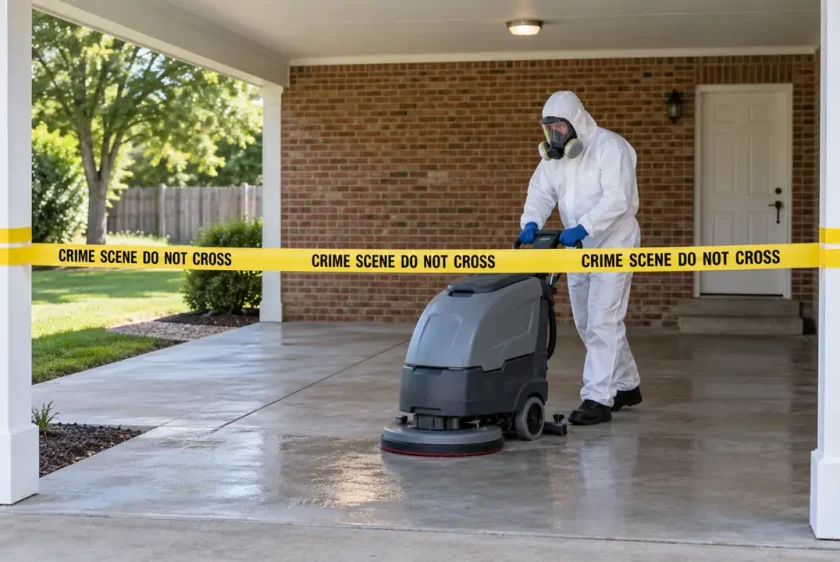
We built our service around that reality. Huuso Bio provides crime scene cleanup, death cleanup, and biohazard remediation in Cary with unmarked vehicles, plain uniforms, and crews who treat your privacy like it’s their own. The truck in your driveway tells the street nothing.
Call (630) 200-1436, any hour, and talk to a person, not a menu.
You only get one chance to pick the right company for this, and you’re picking while having one of the worst days of your life. So here’s the short version of who you’d be letting into the house:
When someone isn’t found for days or weeks, the damage goes deeper than any surface. Our unattended death cleanup crews remove affected materials, treat the structure itself, and take the odor out at the source. Families facing this for the first time can start with our guide for families navigating unattended death cleanup.
No parent, spouse, or sibling should ever do this themselves. Hand our suicide cleanup team the key and let us carry this one part for you, quietly and with care.
Falls, medical emergencies, workplace injuries. Blood reaches subfloor and grout faster than people expect and carries pathogens household products don’t kill. Our blood cleanup service handles removal, disinfection, and legal waste disposal.
Hospital-grade contagious disease cleanup for homes, schools, offices, and vehicles exposed to MRSA, C. diff, or other infectious disease, with results we verify.
Found someone? Call 911 before anything else, even when it’s clearly too late. Illinois law requires an investigation first, and for deaths in Cary that involves the McHenry County Coroner’s Office in Woodstock. That part runs itself; you don’t manage it.
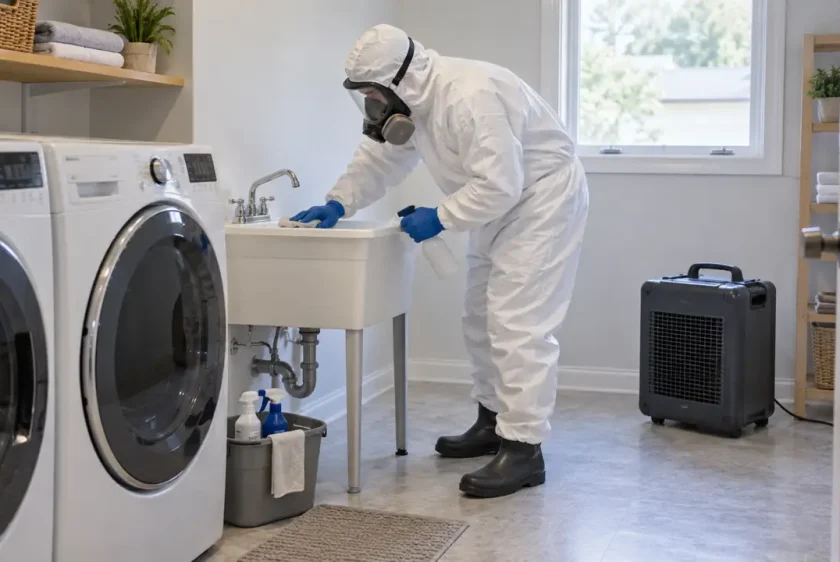
Our part starts when the scene is released, and it runs like this: you call, a person answers, and we give you a straight answer on timing. We walk the property with you or your representative, tell you what needs remediation and what doesn’t, and put the whole scope in writing. Then the crew works: containment, removal, disinfection, deodorization, and verification before we consider anything finished. You get a final walkthrough, complete documentation, and in most cases we bill your insurance carrier directly.
Discretion runs through every step. Unmarked vehicles. No lettering, no logos, nothing for the neighbors on Silver Lake Road or anywhere else to wonder about.
Nobody who quotes biohazard cleanup over the phone, sight unseen, is telling you a real number. The price is set by the job: how many rooms, what the contamination reached (drywall and carpet come out easier than hardwood and subfloor), how long the scene sat, and how much regulated waste has to be hauled and destroyed under Illinois law.
What we commit to before we’ve seen anything: most homeowners policies treat biohazard remediation after a death or crime as a covered claim, and we bill most carriers directly so the money conversation happens between us and the adjuster, not out of your savings. The scope you sign is the price you pay. And where a portion of the home turns out to need ordinary cleaning rather than remediation, it comes off the scope and we say so plainly. Read more in our guide to how homeowners insurance handles biohazard and crime scene cleanup claims.
Cary’s housing tells its history. The older blocks near the Metra station and downtown carry plaster walls, original hardwood, and crawlspaces that hold contamination differently than the newer construction up toward Three Oaks Road and the Cimarron area. Out along the Fox River edges by Trout Valley and Fox River Grove, moisture changes how biological material behaves in a structure. And this is a commuter town: unattended death calls here often start with a neighbor noticing a car that hasn’t moved or mail piling up while everyone else caught the train. We’ve learned this town’s patterns by working in it, and it shows in how we scope and clean.
Cary is home base for this page, but our crews cover the whole Fox River corridor and McHenry County. Browse every community on our service areas page.
Numbers and places Cary families end up needing during weeks like this:
Grief is yours to carry, and nobody can take it. The room is ours, and we can. If something has happened at a Cary property, call (630) 200-1436 and hand this part to us tonight.
A: We serve Cary and the Fox River corridor 24/7 and can typically arrive within hours of the scene being released. When you call we give you a real arrival window based on where our crews actually are, not a sales number.
A: Not from us. Our vehicles are unmarked, our technicians wear plain uniforms, and we share information with no one outside the job. In a town Cary’s size, we treat discretion as part of the service, not an add-on.
A: In most cases, homeowners insurance. Biohazard remediation after a death or crime is a standard covered claim under most policies, and we bill the majority of carriers directly, with the full scope in writing before work begins.
A: Yes, when the source is removed rather than masked. Decomposition odor lives in materials, not air, so we take out what’s affected, treat the structure, and neutralize what remains. When it’s done right, it’s gone, not covered up.
A: No. Once the McHenry County Coroner and Cary PD finish their work and release the scene, cleanup is the property owner’s responsibility under Illinois practice. That’s the moment to call us.
A: We do. Cars, trucks, and fleet vehicles affected by trauma, blood, or biological contamination get the same remediation standard as a home, and we can work where the vehicle sits.
A: Regularly. Rental turnovers after a death, tenant hoarding situations, and common-area incidents all come with documentation your insurer and your ownership group will accept.
