
Everything You Need To Know About Biohazard Cleanup In Palos Heights, Illinois
Illinois law requires professional handling of biohazard spills to protect public health. In Palos Heights, you must rely on certified technicians trained in bloodborne pathogen removal, proper disinfection, and safe disposal. You face serious risks if you attempt cleanup yourself, from exposure to disease to violating local regulations. This guide gives you the facts you need to make informed, responsible decisions.
Key Takeaways:
- Biohazard cleanup in Palos Heights, Illinois involves the safe removal and disposal of dangerous materials like blood, bodily fluids, and chemical residues, which require specialized training and equipment to handle.
- Local regulations and health codes mandate that only licensed professionals perform biohazard remediation to ensure public safety and environmental protection.
- Immediate response during incidents such as unattended deaths, accidents, or hoarding situations helps reduce health risks, prevent property damage, and support emotional recovery for affected families.
Understanding Biohazard Risks in Palos Heights
Every property in Palos Heights carries the potential for biohazard exposure, especially after unexpected incidents. Biological contaminants aren’t always visible, making them particularly dangerous in homes and businesses.
Local climate and aging infrastructure can contribute to mold growth and sewage backups. These conditions create environments where harmful pathogens thrive, putting occupants at risk without immediate awareness.
Common Residential and Commercial Scenarios
Crime scenes, unattended deaths, and hoarding situations often require professional biohazard cleanup in homes. These events leave behind blood, bodily fluids, and compromised materials that standard cleaning can’t safely address.
Commercial properties like offices or rental units may face biohazards from needle disposal, illness outbreaks, or restroom flooding. Business owners are responsible for ensuring these hazards are removed using regulated, sanitary procedures.
Health Hazards Associated with Biological Contaminants
Bloodborne pathogens such as hepatitis and HIV can survive on surfaces for days, exposing anyone who comes into contact. Improper handling increases the risk of infection, especially for children, elderly individuals, or those with weakened immune systems.
Mold spores and decomposing organic matter trigger respiratory issues and allergic reactions. Lingering odors may seem minor, but they often signal deeper contamination that affects long-term health.
Exposure doesn’t always cause immediate symptoms, which makes it dangerous. A spill or residue left untreated can lead to chronic health conditions over time, especially in enclosed spaces with poor ventilation. You may not see the threat, but your body can react to it-persistent headaches, coughing, or skin irritation are early warning signs. Only trained technicians with proper PPE and industrial-grade disinfectants can fully eliminate these risks.
Professional Remediation Standards and Safety
Every biohazard cleanup in Palos Heights follows strict protocols to ensure complete decontamination. You must rely on certified technicians trained to handle blood, bodily fluids, and infectious materials safely. These professionals follow national standards while adapting to local health regulations.
Cleanups are never one-size-fits-all. Your environment, whether a home or business, receives a customized remediation plan. This approach guarantees thorough sanitation while minimizing health risks and property damage.
OSHA and EPA Compliance for Illinois Technicians
Illinois cleanup crews operate under OSHA’s Bloodborne Pathogens Standard to protect both workers and residents. You benefit from procedures that control exposure risks through proper training and documentation. These federal rules are strictly enforced across Palos Heights.
EPA guidelines also shape how technicians handle hazardous waste disposal. You can expect all materials to be transported and processed according to state-approved methods. Compliance ensures environmental safety and legal accountability.
Essential Personal Protective Equipment and Specialized Tools
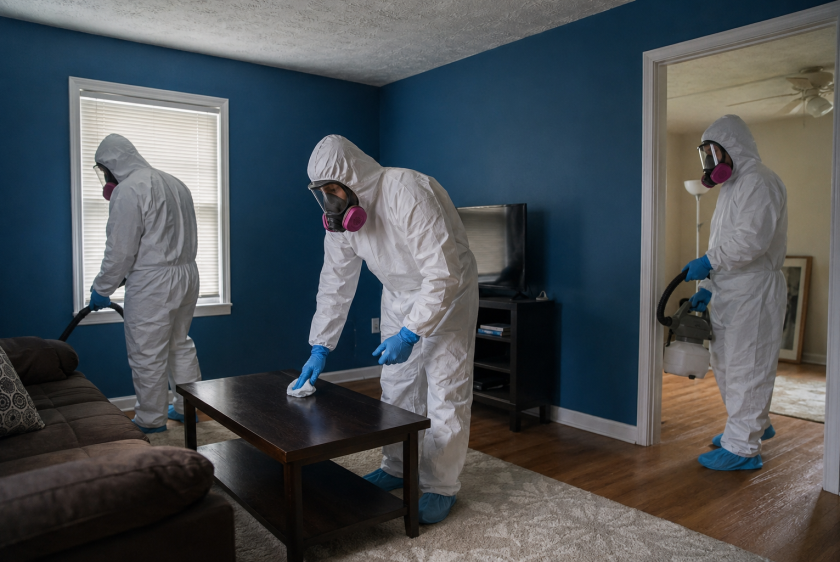
Technicians wear full PPE, including respirators, gloves, and fluid-resistant suits, to shield themselves from contamination. You remain protected because every piece of gear meets OSHA standards. This gear is never reused and is disposed of after each job.
Specialized tools like HEPA vacuums, antimicrobial sprayers, and bio-enzymatic cleaners target pathogens invisible to the eye. You gain peace of mind knowing only professional-grade equipment touches your property. These tools ensure surfaces are not just clean, but truly sanitized.
Your technician’s gear and tools work together to eliminate threats at the source. From sealed containment zones to high-efficiency filtration, every step is designed to stop cross-contamination. You don’t just see the cleanup-you can trust its results.
Core Specialized Cleanup Services
Every biohazard situation demands precision, expertise, and strict adherence to safety protocols. In Palos Heights professional biohazard cleanup teams respond with advanced training and certified equipment to handle high-risk environments safely. You can expect thorough decontamination that meets state and federal regulations, ensuring your property is restored to a safe, habitable condition.
These services go beyond surface cleaning, targeting hidden contaminants that pose serious health risks. From initial assessment to final sanitization, every step is documented and executed with discretion and care. Your safety and peace of mind remain the top priority throughout the entire process.
Crime Scene, Trauma, and Suicide Remediation
Crime scenes and traumatic incidents leave behind more than emotional distress-they create dangerous biological hazards. You need a team trained to remove blood, tissue, and other biohazardous materials safely and compassionately. These cleanups follow strict OSHA and EPA guidelines to prevent exposure and cross-contamination.
Technicians work quickly and discreetly, respecting your privacy during an incredibly difficult time. Specialized enzymes and antimicrobial treatments eliminate odors and pathogens, restoring the space to a sanitary state. You’re not just cleaning a scene-you’re reclaiming a sense of normalcy.
Unattended Death and Infectious Disease Decontamination
Unattended deaths often result in extensive contamination due to decomposition and fluid spread. You face not only emotional strain but also serious health risks from bacteria, mold, and airborne pathogens. Certified professionals use containment strategies and hospital-grade disinfectants to fully decontaminate affected areas.
Each cleanup is handled with dignity and precision, following biohazard remediation standards set by public health authorities. You receive a thoroughly sanitized environment, with all porous materials properly disposed of and non-porous surfaces deep-cleaned and tested for safety.
When dealing with unattended death or infectious diseases like hepatitis or MRSA, time-sensitive action is vital. Decomposition accelerates pathogen growth, increasing the risk of illness to anyone exposed. You benefit from rapid response teams equipped with PPE, antimicrobial fogging systems, and hazardous waste handling certifications, ensuring complete pathogen elimination and regulatory compliance. This level of detail protects your health and prevents future liability.
The Systematic Biohazard Restoration Process
Every biohazard cleanup in Palos Heights follows a strict, step-by-step protocol to ensure safety and compliance. You can expect professionals to arrive equipped with proper PPE and containment tools, ready to secure the scene immediately. This structured approach minimizes exposure risks and prevents cross-contamination throughout your property.
Trained technicians use industry-recognized methods to address biological threats efficiently. From initial evaluation to final clearance testing, each phase is documented and executed with precision. You’re not just getting a cleanup-you’re receiving a thorough restoration designed to return your space to safe, livable conditions.
Initial Assessment and Site Containment
Upon arrival, specialists evaluate the extent of contamination and identify potential hazards. You’ll see them cordoning off affected areas using physical barriers and negative air pressure units to prevent pathogen spread. This immediate action protects both your household and the cleanup team.
They document conditions with photos and notes, creating a clear action plan tailored to your situation. You remain informed throughout, with updates on safety measures and expected timelines. Containment isn’t just a step-it’s the foundation of a successful biohazard response.
Cleaning, Sanitization, and Deodorization Protocols
Technicians remove all biohazardous materials using EPA-registered disinfectants and hospital-grade cleaning agents. You’ll notice a methodical scrubbing of surfaces, followed by targeted sanitization to eliminate lingering pathogens. Every tool and step follows OSHA and CDC guidelines to ensure maximum safety.
Deodorization comes after cleaning, using fogging or ozone treatments to neutralize odors at the molecular level. You won’t just see a clean space-you’ll smell it too. These protocols ensure your environment is not only visibly restored but also microbiologically safe.
During cleaning, porous materials exposed to biofluids are typically removed and disposed of following regulated biohazard waste procedures. Non-porous surfaces undergo multiple disinfection passes, with ATP testing used afterward to verify cleanliness. You receive confirmation that your space meets public health standards, giving you confidence in its safety.
Legal Waste Disposal and Environmental Safety
Complying with state and local laws ensures biohazardous waste doesn’t endanger public health or the environment. You must dispose of materials like blood-soaked fabrics, sharps, and bodily fluids through licensed medical waste handlers who follow strict containment protocols.
Improper disposal risks fines and contamination. All waste is tracked from pickup to final incineration, maintaining a clear chain of custody. You’re responsible for verifying your cleanup provider uses state-approved disposal facilities.
Illinois Regulations for Biohazardous Material Transport
Transporting biohazardous waste in Illinois requires Department of Public Health and EPA compliance. You can only move these materials in DOT-approved, leak-proof containers labeled with biohazard symbols and proper documentation.
Drivers must have specialized training and permits. Any deviation from transport rules can result in penalties. You should confirm your service provider follows these requirements to avoid legal and environmental consequences.
Coordination with Local Palos Heights Emergency Services
Working alongside Palos Heights fire and police departments ensures a faster, safer response during biohazard incidents. You benefit from immediate scene assessment and support when emergency crews are looped in from the start.
First responders secure the area, allowing cleanup teams to enter safely. Your chosen company should have established communication channels with local agencies for seamless cooperation.
When a biohazard event occurs, time-sensitive coordination prevents cross-contamination and accelerates site recovery. Your cleanup provider may be required to file incident reports with the Palos Heights Fire Prevention Bureau, especially in cases involving trauma or unattended deaths. This collaboration ensures transparency and adherence to municipal safety standards while protecting your property and community health.
Navigating Insurance and Service Costs
Homeowners and Commercial Insurance Coverage Factors
Insurance policies vary widely in how they handle biohazard incidents. Some cover cleanup after trauma, crime, or unattended death, while others exclude these situations entirely. Check your policy for terms like “cleanup,” “decontamination,” or “restoration” to understand what’s included.
- Coverage often depends on the incident’s cause
- Intentional acts are typically not covered
- Water damage from sewage backups may require separate riders
Any oversight in understanding your policy could leave you responsible for full out-of-pocket expenses.
Determining the Scope of Professional Remediation Estimates
Accurate estimates depend on the type and extent of contamination. A certified technician will inspect affected areas, identify biohazard zones, and outline required steps for safe removal and disinfection.
Costs reflect labor, protective equipment, disposal fees, and structural repairs. Any estimate should itemize these components so you know exactly what you’re paying for.
Understanding the full scope ensures no hidden charges and confirms the cleanup meets health regulations. A detailed assessment prevents incomplete work that could endanger your household or employees.
Final Words
As a reminder, biohazard cleanup in Palos Heights, Illinois requires professional handling to ensure safety and compliance. You face serious health risks when dealing with blood, bodily fluids, or chemical contaminants, and only trained technicians have the proper equipment and knowledge to manage these situations effectively. Attempting cleanup on your own puts you and others at risk of exposure and infection.
You must rely on certified cleanup services that follow state and federal regulations. These professionals provide thorough decontamination, safe disposal, and documentation, giving you peace of mind after a traumatic event.
FAQ
Q: What types of situations require professional biohazard cleanup in Palos Heights, Illinois?
A: Biohazard cleanup is necessary after events involving blood, bodily fluids, chemical spills, mold infestations, or decomposed remains. Common scenarios include crime scenes, unattended deaths, hoarding situations, sewage backups, and industrial accidents. In Palos Heights, local health codes and environmental regulations require that these materials be handled by trained professionals using proper containment, disinfection, and disposal methods. Attempting cleanup without proper training or equipment risks exposure to pathogens like hepatitis or HIV and can lead to long-term health hazards or legal issues.
Q: Are biohazard cleanup companies in Palos Heights licensed and insured?
A: Reputable biohazard cleanup companies operating in Palos Heights must carry general liability insurance and workers’ compensation coverage. Many are also certified through national organizations such as the American Bio-Recovery Association (ABRA) or meet OSHA and EPA standards for handling hazardous materials. These certifications ensure technicians follow strict safety protocols, use hospital-grade disinfectants, and dispose of waste at approved medical waste facilities. Residents should always ask for proof of licensing and insurance before allowing a company to begin work.
Q: Does homeowners insurance cover biohazard cleanup in Palos Heights?
A: Most homeowners insurance policies in Illinois provide some coverage for biohazard cleanup, especially when the incident results from a covered loss like a burst pipe, accidental injury, or fire. However, situations involving long-term neglect, illegal activity, or suicide may not be fully covered. It’s common for policies to have limits on reimbursement, so out-of-pocket costs can vary. Cleanup companies in Palos Heights often work directly with insurance providers to file claims and provide documentation, helping streamline the process for the homeowner.