You face an overwhelming situation when a suicide occurs in your home or workplace, one that demands immediate, careful attention to both health and emotional well-being. Professional companies in suicide cleanup in Schaumburg handle biohazards with precision, ensuring your space is safely restored to a sanitary condition. These experts operate under strict protocols, addressing risks you may not see but could endanger your health. Their presence allows you to focus on healing while they manage the complex, sensitive work of remediation with discretion and experience specific to local needs.
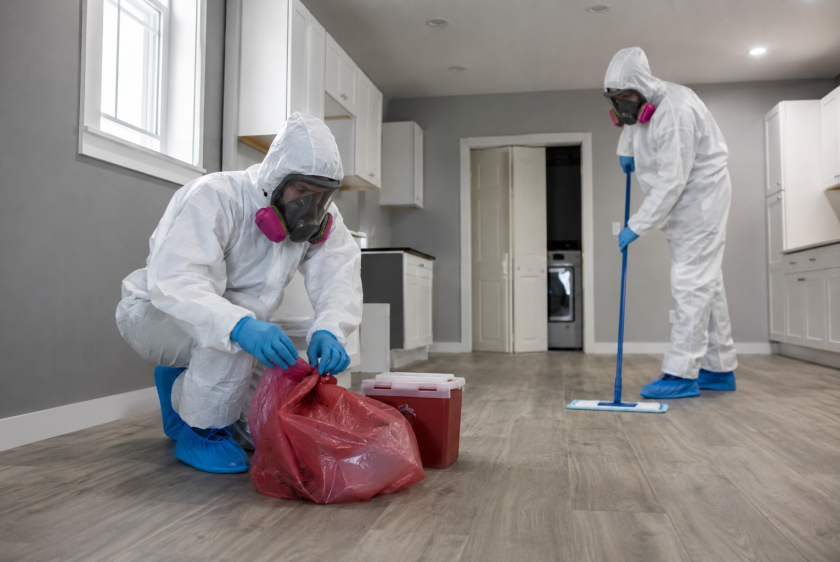
Professional suicide cleanup crews in Schaumburg operate with precision-grade tools designed for biohazard exposure. You receive thorough site remediation because technicians use impermeable PPE, biohazard containment units, and HEPA vacuum systems that meet OSHA bloodborne pathogen standards. These protocols prevent cross-contamination across porous and non-porous surfaces.
Each cleanup follows a documented decontamination sequence, starting with physical bio-matter removal and ending with third-party air quality verification. You benefit from systematic sanitation that household cleaners cannot replicate, especially in cases involving decomposition or chemical exposure.
Hospital-grade disinfectants approved by the EPA form the foundation of surface sanitation during biohazard cleanup. You can expect these solutions to eliminate pathogens like MRSA, hepatitis, and C. difficile from floors, walls, and structural elements. Unlike consumer-grade bleach, these agents remain effective in organic residue, ensuring reliable microbial kill.
Technicians apply these disinfectants using electrostatic sprayers for uniform coverage, even on hard-to-reach surfaces. You avoid residual health risks because each application adheres to dwell time and concentration guidelines specified by the manufacturer and regulatory bodies.
Industrial air scrubbers actively filter airborne contaminants during cleanup, capturing fine particulate matter and volatile organic compounds. You experience immediate air quality improvement as these units cycle air through HEPA and carbon filtration stages, reducing inhalation risks for occupants and responders.
Molecular odor neutralizers break down odor-causing compounds at the chemical level rather than masking them. You benefit from lasting freshness because these agents target amines and sulfur-based molecules produced during decomposition, eliminating the source of persistent smells.
A single air scrubber can process up to 2,000 cubic feet of air per minute, operating continuously throughout the remediation. You gain confidence in indoor air safety as real-time particle counters confirm reductions in airborne bioaerosols, supporting a return to normal occupancy. These systems are necessary in enclosed spaces like apartments or basements where ventilation is limited.
Illinois law mandates strict handling of biohazardous materials, requiring certified disposal through approved medical waste channels. Your cleanup team must follow OSHA’s Bloodborne Pathogens Standard, ensuring contaminated items are sealed, labeled, and transported in compliance with federal and state rules. Sharps, bodily fluids, and porous materials are processed separately to prevent exposure during transit.
EPA guidelines govern the use of disinfectants and the containment of hazardous residues. Only EPA-registered agents are applied, and runoff is controlled to avoid environmental contamination. A mid-sized SaaS firm converting an office after an incident found that improper disposal led to a citation, underscoring the need for certified procedures.
Property owners face legal exposure if biohazard cleanup is handled improperly, especially if untrained individuals are exposed. Illinois courts have upheld liability in cases where landlords attempted in-house remediation without certified biohazard protocols. Hiring a licensed team creates a documented chain of custody and compliance, shielding you from negligence claims.
Insurance providers often require proof of professional remediation before approving claims related to biohazard incidents. Your documentation includes disposal manifests, staff certifications, and site clearance reports. A residential landlord in Schaumburg avoided a lawsuit after a tenant’s suicide when records showed immediate response by an IEMA-compliant contractor.
Legal protection extends beyond documentation-professional crews carry liability insurance that covers accidental exposure or cross-contamination. Your responsibility as a property owner is reduced when third-party experts assume operational control. This layer of coverage is not available to unlicensed individuals attempting cleanup, leaving you financially exposed in the event of an incident.
Seeing a loved one’s final moments replayed in the physical environment can deepen emotional wounds. Trained technicians remove not just biohazards but the visual triggers that intensify grief. A mid-sized SaaS firm relocating after an incident noted how staff distress decreased immediately after certified cleanup. Your family avoids exposure to scenes that could lead to prolonged psychological strain.
Professionals follow trauma-informed protocols that prioritize emotional safety alongside physical cleanup. They move efficiently, reducing the time family members spend near affected areas. This structured response helps prevent retraumatization during an already fragile period.
Service vehicles arrive without markings, and staff wear plain attire to avoid drawing attention. Your neighbors won’t know the nature of the visit, preserving the family’s privacy during a sensitive time. Crews enter and exit quietly, using covered equipment to maintain discretion.
Communication occurs directly with designated family members, not through public channels. Paperwork and insurance coordination are handled confidentially, limiting exposure of personal details. This approach was critical for a family in Roselle Road who valued low visibility after a loss.
Teams use unbranded trucks and neutral-colored equipment cases to blend into residential neighborhoods. Scheduling occurs at times that minimize foot traffic, often early morning or late evening. All waste is sealed in opaque, labeled containers transported in locked compartments, ensuring no accidental disclosure during transit.
Local Schaumburg teams arrive within hours, equipped to evaluate biohazard exposure and secure affected areas. Immediate containment prevents cross-contamination to adjacent rooms or ventilation systems. Technicians isolate porous materials, seal off entry points, and establish decontamination corridors to limit pathogen spread. A mid-sized SaaS firm converted into a residential unit last year required such intervention after an undetected incident delayed initial response by 48 hours.
Specialized sensors detect airborne particulates and surface residue invisible to the naked eye. Response crews use ATP testing to confirm microbial load before beginning full remediation. This precision reduces unnecessary material removal while ensuring high-risk zones are fully addressed from the outset.
Schaumburg professionals maintain established protocols with Cook County Sheriff’s Office and village public safety departments. Once law enforcement clears a scene, cleanup teams receive direct communication for immediate access. This alignment avoids delays that could exacerbate health risks or prolong family distress. Documentation is shared securely to meet evidentiary standards without compromising cleanup integrity.
Insurance claims progress faster when remediation firms supply itemized logs, OSHA-compliant disposal records, and timestamped photo documentation. Adjusters from State Farm and Allstate offices in nearby Woodfield frequently approve filings within 72 hours when these details are provided upfront. Your provider handles communication, reducing personal interaction during an already difficult time.
These teams often act as intermediaries, submitting proof of service completion directly to carriers while preserving confidentiality. A case near Meacham Road last winter demonstrated how early coordination prevented claim denial due to improper waste handling allegations. Proper chain-of-custody forms and licensed transport eliminated liability for the homeowner.
Trained technicians identify and remove compromised materials such as drywall, insulation, or carpet padding that have absorbed biohazardous fluids. These porous substances cannot be fully sanitized and require careful extraction to prevent lingering contamination. Specialized containment protocols limit cross-contamination during removal, preserving unaffected areas.
Your property’s structural integrity is preserved through precise remediation, targeting only what must be replaced. Non-porous surfaces undergo multi-stage disinfection using EPA-registered agents effective against bloodborne pathogens. This process follows strict OSHA and CDC guidelines, ensuring all contact surfaces meet clearance standards.
A third-party assessment or ATP testing may be used to verify the absence of biological residue on surfaces. These objective measures confirm that disinfection was effective, providing documented proof of safety. Clearance is not assumed-it is demonstrated through scientific evaluation.
You receive a formal bio-clearance report detailing the scope of work and verification results. This documentation supports insurance claims and future occupancy confidence. A mid-sized SaaS firm in Schaumburg recently cited this report as imperative when resuming office operations after an incident. The final step isn’t just cleaning-it’s certified restoration.
A: Standard cleaning companies lack the training and certification to manage biohazardous materials such as blood, bodily fluids, and tissue residues. These substances can carry bloodborne pathogens like HIV, hepatitis B, and hepatitis C, which require containment using OSHA-compliant protocols. A typical janitorial crew does not use medical-grade disinfectants or personal protective equipment rated for biohazard exposure, increasing health risks for both cleaners and future occupants. Professional suicide cleanup technicians in Schaumburg undergo specialized instruction in trauma scene decontamination and follow strict chain-of-custody procedures for waste disposal at licensed medical facilities.
A: Certified technicians begin with a full hazard assessment to identify contaminated surfaces and porous materials that may need removal. They use EPA-registered enzymatic cleaners and hospital-grade disinfectants to neutralize pathogens on hard surfaces, while items like carpets, insulation, or drywall that have absorbed fluids are carefully extracted and disposed of as regulated medical waste. Air quality testing may follow decontamination to confirm the absence of airborne contaminants. A mid-sized SaaS firm in Schaumburg recently reported that after a suicide in their office building, the restoration team completed clearance testing and provided documentation verifying the site met state safety standards before reoccupancy.
A: Responding during a period of intense grief, local professionals provide discreet, compassionate service that removes the burden of managing a traumatic scene. Families avoid direct exposure to disturbing residues and the logistical challenges of waste transport and regulatory compliance. These teams coordinate with law enforcement, coroner’s offices, and property managers to streamline access and documentation. One family in the Roselle Road area noted that the cleanup crew arrived within two hours of the call, worked overnight with minimal disruption, and returned the home to a livable condition so funeral planning could proceed without delay.
