Most responses rely on seamless coordination between law enforcement and crime and trauma scene cleanup teams; you depend on this partnership to restore public safety, manage evidence-preserving decontamination, and support affected communities. Understanding roles, communication protocols, and legal boundaries helps you see how rapid biohazard cleanup reduces secondary hazards, preserves scene integrity, and speeds community recovery. When you recognize this overlooked connection, you appreciate policies and training that align operational goals and protect both responders and civilians.
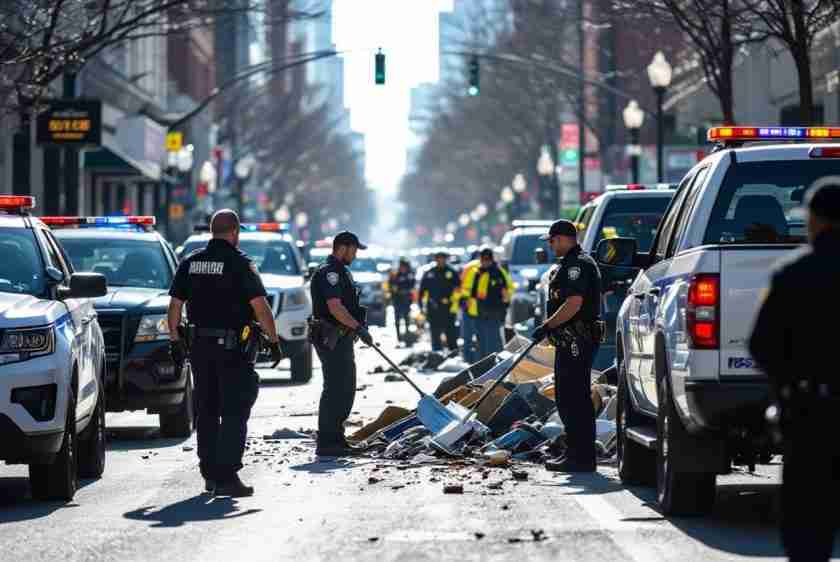
You rely on law enforcement to create the immediate conditions for safe cleanup by securing scenes, managing evidence, and coordinating multi-agency responses so your cleanup teams can work without exposure or legal complication. Officers typically establish controlled perimeters, log every entry and exit, photograph and tag evidence, and maintain chain-of-custody documentation that prosecutors will later require; those procedural steps determine whether a scene is cleared for sanitation crews or must remain intact for forensic work.
Operationally, expect an incident command structure, often aligned with NIMS, to assign an incident commander and a safety officer who liaise with public health, medical examiners, and hazmat teams; this coordination dictates timelines from a few hours to several days depending on investigation or contamination levels. Your planning should account for those variables so cleanup schedules, contractor mobilization, and resident communications align with investigatory and safety priorities.
You should expect officers to protect life and property while preserving the integrity of a scene for investigative and legal purposes: crowd control, traffic management, victim and witness stabilization, evidence preservation, and documentation. Practical tasks include establishing secure access points with logbooks, photographing scenes, collecting and packaging evidence per department protocol, and coordinating temporary evacuations or shelter-in-place orders if hazardous materials are present.
Legal obligations also shape their actions; officers must follow statutes, departmental policies, and standards from agencies such as OSHA and local public health when hazmat or biohazard risks exist. If evidence handling or scene security is breached, you can see prosecutions undermined and liability shifted to property owners or contractors, so law enforcement’s procedural discipline directly affects both criminal outcomes and your operational risk.
You build trust when law enforcement communicates clearly about what happened, what steps are being taken, and when cleanup will occur. Simple, regular briefings and transparent timelines reduce rumors and resistance to remediation. Programs like citizen police academies, neighborhood liaison officers, and joint town halls with sanitation and public health create repeated, high-contact interactions that increase cooperation; agencies that publish after-action summaries and response metrics often report better community compliance during subsequent incidents.
Visible collaboration between officers and crime scene cleanup teams reassures residents: joint public demonstrations of safety gear and cleanup protocols, on-scene PIO statements that explain why areas remain closed, and staffed community hotlines all lower fear and litigation risk. You should consider formalizing a liaison role so contractors and residents have a single, trained point of contact within the department during incident response.
For concrete steps you can implement, require pre-incident MOUs that define notification thresholds, the officer role in scene clearance, and documentation standards; mandate that each response include a PIO who releases a timeline and safety guidance within 24 hours; and run after-action surveys measuring community trust, response clarity, and cleanup satisfaction to track improvements over time.
Cleanup teams remove biohazards, structural debris, and chemical contaminants that otherwise prolong public health risks and impede investigations. You rely on those teams to follow OSHA’s Bloodborne Pathogens standard (29 CFR 1910.1030), HAZWOPER protocols for hazardous materials, and industry standards such as IICRC S500 for trauma and biohazard remediation to protect responders and the public while preserving scene integrity for law enforcement and insurers.
Rapid, methodical cleanup also accelerates economic recovery by enabling businesses to reopen and public services to resume; typical response windows range from 24 hours for immediate life-safety debris removal to 72+ hours for full remediation, depending on site complexity and permitting. You see the difference in neighborhoods where prompt cleanup reduces blight, shortens sheltering needs, and lowers the administrative burden on emergency managers coordinating multiagency response.
Visible removal of debris and contaminants reduces fear and improves civic confidence, which in turn affects reporting rates, foot traffic, and local commerce. Empirical work on environmental interventions — including randomized and quasi-experimental studies of vacant‑lot greening — has shown double‑digit percentage declines in some violent outcomes within treated areas, while municipal blight-removal programs have reported measurable upticks in property transactions and business permits within 6–12 months of interventions.
Mental-health outcomes also shift when neighborhoods are restored: survivors, first responders, and bystanders experience fewer triggers when scenes are professionally remediated and sanitized, lowering demand for crisis outreach over time. You can quantify those benefits by tracking call volumes to crisis lines, police non-emergency complaints, and local public-health clinic visits before and after cleanup operations.
Integration into local incident management systems makes cleanup operations legally defensible and operationally efficient; you should plug into the jurisdiction’s ICS/NIMS structure, identify liaison officers at police, fire, public works, and health departments, and confirm the legal authority for entry, evidence handling, and waste transport before work begins. In homicide or major-incident scenes, law enforcement typically secures the perimeter and documents evidence—cleanup teams coordinate timing so you never disturb investigative material, often waiting 24–72 hours or until clearance is documented.
Funding and liability are resolved faster when you use standard agreements and documentation: execute MOUs or service contracts that spell out insurance limits, indemnification, and invoicing procedures, and maintain daily cost logs and photographic records to support FEMA Public Assistance or municipal reimbursement when incidents escalate to declared disasters. Compliance with EPA waste rules and DOT hazardous-material transport requirements prevents secondary regulatory penalties that can stall recovery.
Training and credentialing underpin effective collaboration: your crew should hold HAZWOPER (40‑hour) or applicable refresher courses, OSHA bloodborne‑pathogens training, and IICRC S500 certifications where relevant, and you should run joint drills with police and emergency management at least annually so response times, evidence-preservation protocols, and chain-of-custody procedures are practiced and documented in after-action reports.
You see tangible gains when investigations and remediation move as a single operation: scene clearance times often fall from multi-day waits to same-day or next-day turnover, enabling crews to remove hazards and restore public spaces before secondary problems develop. Shared protocols for evidence preservation and PPE use let you avoid delays caused by uncertainty about who controls the scene, and the resulting continuity cuts overall recovery costs through fewer repeat visits and lower community complaint rates.
Shared data feeds—CAD integrations, call-category tagging, and joint incident logs—give you visibility into hotspots so resources are deployed proactively instead of reactively. Metrics from coordinated programs commonly show 30–60% reductions in repeat incidents and measurable improvements in resident-reported safety within six months of program start.
Your response timeline becomes predictable when dispatch, patrol, and remediation teams operate from the same playbook: law enforcement secures a scene (typical on-site arrival 8–20 minutes after dispatch), an evidence-handoff protocol is completed in 15–45 minutes, and cleanup crews begin mitigation within 2–24 hours depending on contamination risk. You can set clear thresholds—biohazard class, structural instability, or active investigation—that determine hold times and safe-entry checklists so crews know exactly when they can begin.
Joint training and quarterly tabletop exercises reduce confusion and speed handoffs; many programs report a 25–40% decrease in on-scene hold times after standardized drills. You benefit from pre-agreed waste-disposal streams, streamlined permit waivers for emergency work, and mutual aid agreements that increase surge capacity during mass-casualty events or large-scale illegal dumping incidents.
You can draw templates from municipal and county pilots that quantify outcomes across response time, cost, and public perception. The following case studies illustrate measurable returns when law enforcement and cleanup teams align objectives, share communications, and co-develop SOPs.
You can use these outcomes to build performance targets and funding requests, mapping specific metrics—response time, repeat-incident rate, area restored, and per-site cost—back to policy changes like shared dispatch protocols or joint procurement for cleanup supplies.
On-scene priorities often diverge: law enforcement focuses on evidence preservation and chain-of-custody, while cleanup teams must mitigate biohazards and restore habitability—these goals can conflict over timing and access. Typical crime-scene processing windows range from 24 to 72 hours for preliminary work, but evidence holds and legal inquiries can extend restrictions for days or weeks, forcing cleanup crews to wait or perform interim containment that adds cost and complexity.
Overlapping authorities and fragmented protocols magnify delays. Urban incidents frequently involve municipal police, county investigators, transit or building inspectors, and contracted remediation firms; a mid-sized multi-agency response can easily require coordination across 3–5 separate command structures, producing handoff errors, duplicated documentation, and liability disputes unless roles are pre-defined and rehearsed.
Different vocabulary and technological incompatibilities create frequent misunderstandings; law enforcement uses incident command terms and evidence-specific lexicon while remediation crews speak in exposure limits, PPE levels, and remediation standards (e.g., ATP testing, HEPA filtration rates). You may find radios on encrypted channels while contractors run on commercial frequencies, requiring cross-agency gateways or designated liaisons to avoid missed directives.
Documentation practices diverge as well—police log every item for chain-of-custody with sequential numbering and retained photographs, whereas cleanup teams rely on job tickets, scope-of-work checklists, and discharge manifests. Joint training using NIMS-compliant terminology and shared digital forms cut handoff time; agencies that ran quarterly tabletop exercises reduced post-incident rework in several after-action reviews.
Limited access to specialized equipment and PPE is a recurring bottleneck: trauma and biohazard remediation often require HEPA vacuums, negative-pressure ventilation, class-A containment tents, and sealed evidence transfer containers that most municipalities don’t stock. You may need to mobilize 2–4 trained technicians per residential unit for safe remediation, and shortages of qualified personnel extend timelines and raise per-job costs.
Funding timelines complicate rapid procurement—municipal budgets and grant disbursements rarely align with acute needs. Contracting private firms on emergency task orders without pre-negotiated rates can create procurement delays, and disputes over who covers chain-of-custody storage, disposal fees, or temporary housing for affected residents can stall action.
Leveraging pre-existing mechanisms eases strain: you can tap FEMA Public Assistance after a declared disaster, request inter-state support through EMAC, or establish standing cooperative purchasing agreements with vetted remediation vendors to lock in rates and response times. Including contingency line items in annual budgets for PPE and evidence-grade containment equipment—typically 10–15% of an emergency response fund—reduces ad hoc spending and accelerates on-scene turnover.
Design joint metrics that you can measure after every incident: dispatch-to-arrival time, scene clearance time, number of evidence preservation violations, and community complaints. Targeted goals—such as reducing dispatch-to-cleanup time from 60 to 30 minutes or achieving 100% photography documentation on every scene—give both law enforcement and cleanup teams concrete priorities to align around.
Use short, repeatable routines to build trust: a 10-minute pre-shift coordination call, a shared digital case folder with timestamps and chain-of-custody entries, and a post-incident 20-minute after-action review. Agencies that adopt these micro-processes typically see faster release of scenes and fewer rework events because roles and expectations are repeatedly reinforced.
Cross-training should include at least quarterly tabletop exercises and two full-scale joint drills per year so you can practice handoffs under stress. Include OSHA 1910.1030 bloodborne pathogen modules for cleanup crews, plus ride-alongs where cleanup technicians spend a 4–8 hour shift embedded with patrol to understand scene dynamics and evidence concerns.
Implement standardized certifications: require cleanup staff to hold agency-approved courses (for example, a recognized bloodborne pathogen certificate and a documented chain-of-custody workshop), and require officers assigned to scene release to complete a short briefing on cleanup procedures. Track training completion in a shared LMS and audit compliance monthly to close knowledge gaps before they affect operations.
Define the decision points that trigger cleanup versus investigation: list who authorizes release, typical hold windows (commonly 24–72 hours pending forensic needs), and the exact information the investigator must provide before cleanup begins (case number, contact, evidence areas off-limits). Put those rules into a one-page flowchart that you distribute to dispatch, patrol, detectives, and vendors.
Formalize agreements with memoranda of understanding (MOUs) or service-level agreements (SLAs) that specify response times (for example, on-scene within 60 minutes for high-priority calls), liability boundaries, insurance minimums, and documentation standards such as required photo angles, GPS-tagged timestamps, and an itemized work log tied to the police case number.
Operationalize the protocol through easily used tools: a shared digital checklist embedded in your CAD or mobile app, a 24/7 rotating contact roster with escalation tiers, and a standardized evidence-tagging form so you can demonstrate chain-of-custody continuity. Enforce protocol adherence via monthly audits and corrective-action logs so lapses are corrected before they become community-facing problems.
Formalizing collaboration between your law enforcement agency and cleanup teams turns one-off operations into sustained programs that interrupt cycles of neglect. Shared protocols, joint funding streams, and routine intelligence-sharing let you target persistent hotspots, reduce repeat offenses, and build a predictable maintenance cadence that residents can rely on.
Continued cooperation also multiplies return on investment: pooled equipment and cross-trained crews cut duplication, while shared data dashboards let you measure outcomes over quarters and years rather than days. That longitudinal view makes it easier for you to justify budgets, secure grants, and show elected officials concrete progress tied to specific interventions.
Coordinated remediation and enforcement create visible, lasting change that reshapes how residents use public space. A randomized controlled trial in Philadelphia found that greening and maintaining vacant lots produced a 13% reduction in violent crime and a 39% reduction in gun assaults on treated blocks, demonstrating how environmental interventions translate to measurable safety gains you can point to when planning strategy.
You can institutionalize those effects by embedding cleanup into routine policing workflows: adopt memoranda of understanding that specify roles, set recurring cleanup calendars, and link 311 complaint data with patrol beats. Over 12–24 months this approach converts reactive pickups into preventive maintenance, reduces blight-related calls for service, and stabilizes neighborhood conditions for local businesses and schools.
Visible cleanups paired with targeted enforcement change public perception as well as actual risk; residents start to reclaim parks and sidewalks, increases in foot traffic discourage loitering, and informal surveillance rises. When you align cleanup timing with patrol presence—clean in the morning, increase foot patrols in the evening—you create complementary signals that discourage reoffending and encourage lawful activity.
Operational details matter: establish a shared GIS layer that flags chronic dump sites, set KPIs such as time-to-clear and recurrence rate, and run quarterly joint reviews so you can adjust tactics. Those small process controls let you track outcomes like reduced nuisance complaints or fewer vandalism incidents and communicate progress to the community with hard numbers.
For added impact, couple cleanup/enforcement cycles with community events and signage that advertise maintenance schedules and reporting channels; cities that pair physical improvements with outreach often see faster shifts in resident behavior, increased reporting of issues through official channels, and improved trust metrics you can cite in annual reports.
Upon reflecting on the interplay between law enforcement and cleanup teams, you can see that effective restoration of peace and safety depends on clear roles, rapid coordination, and mutual respect. When you align evidence preservation with biohazard removal, you reduce secondary harm, accelerate community recovery, and maintain the integrity of investigations while addressing public health and environmental risks.
You should institutionalize joint protocols, regular cross-training, and shared communication platforms so your teams operate with a common playbook during crisis response. By investing in interoperable systems, transparent public reporting, and after-action reviews, you improve outcomes for victims, strengthen public trust, and create a resilient framework that prevents scenes from becoming sources of ongoing trauma or disorder.
Effective coordination shortens scene resolution time, preserves public safety and evidence integrity, reduces secondary hazards, and improves community confidence. Law enforcement secures the perimeter, controls entry, and documents evidence; cleanup teams neutralize biological, chemical, and structural threats and restore livable conditions. When both operate from shared objectives and synchronized timelines, they avoid overlap that can compromise forensic results, create dangerous exposures, or prolong displacement of residents. Clear roles and handoff procedures also help mental health professionals and social services re-enter safely to assist victims and witnesses.
Use an integrated incident command approach with predefined roles, checklists, and communication channels. Establish scene zones (hot/warm/cold), a single point of contact or liaison from each agency, and documented handoff criteria that specify when evidence collection is complete and cleanup may begin. Conduct joint pre-incident planning and regular exercises that cover biohazards, chemical contamination, and structural hazards. Require shared briefings on PPE, decontamination procedures, and chain-of-custody protocols. Maintain interoperable radios or secure digital messaging and incident logs so decisions, timestamps, and movements are recorded for accountability and post-incident review.
Verify authority and permits for cleanup work, confirm evidence preservation obligations, and ensure compliance with occupational safety and environmental regulations (OSHA, EPA, local health departments). Establish written agreements on liability, indemnification, and cost recovery between law enforcement, property owners, and contractors. Require contractor certifications for hazardous-materials handling, proper waste disposal documentation, and insured coverage for bodily injury and environmental release. Document scene conditions and chain-of-custody to reduce litigation risk, and keep victim privacy and victim-witness protections in mind when sharing information.
