Contagious pathogens can linger on surfaces and in the air long after symptoms subside, so professional cleanup removes infectious materials, decontaminates environments, and interrupts transmission chains that might expose you or others later; by applying industry-standard disinfection, proper waste handling, and targeted remediation, cleanup reduces risk of secondary outbreaks and protects your health, property, and peace of mind.
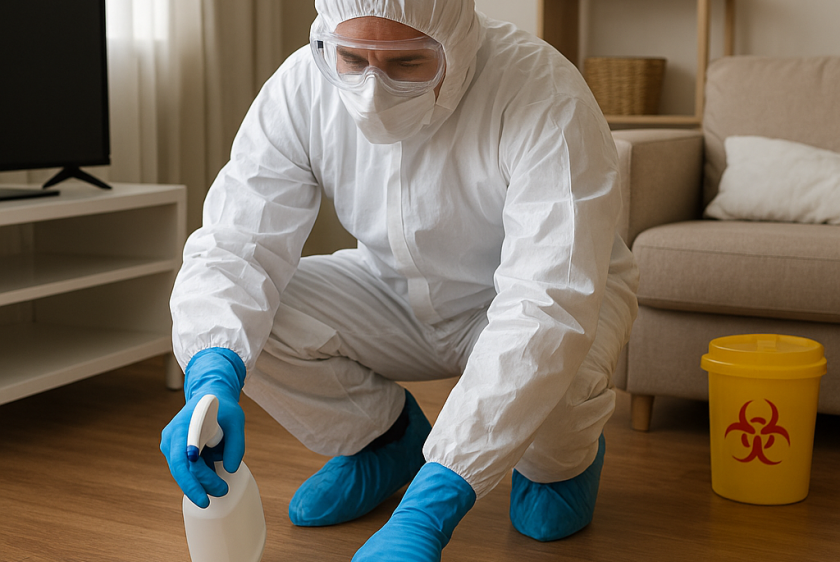
You need to distinguish between pathogen classes because cleanup strategies differ by agent: viruses (influenza, SARS-CoV-2, norovirus), bacteria (MRSA, C. difficile), fungi (Candida), parasites (Giardia, malaria), and prions (Creutzfeldt-Jakob disease) demand different containment, disinfectants, and disposal methods. Viral respiratory pathogens often spread rapidly but are susceptible to routine disinfectants for enveloped viruses, while spore-forming bacteria like C. difficile require sporicidal agents and stricter waste handling.
Type | Representative example & key characteristic |
|---|---|
Virus | Norovirus — highly infectious, fecal-oral and surface spread, persists days–weeks |
Bacterium | C. difficile — spore-former, requires bleach or other sporicidal agents |
Fungus | Candida auris — environmental persistence, healthcare-associated transmission |
Parasite | Giardia — waterborne, requires filtration and targeted sanitation |
Prion | Creutzfeldt-Jakob — highly resistant to standard sterilization, requires special protocols |
Recognizing the pathogen class helps you select PPE, cleaning agents, contact times, and post-clean verification methods to reduce the risk of secondary transmission.
You should map transmission routes to the environment: respiratory droplets typically travel 1–2 meters and contaminate surfaces and close contacts, while aerosols can remain suspended in poorly ventilated rooms and spread beyond that range — measles has an R0 of 12–18 demonstrating high airborne transmissibility, whereas seasonal influenza often has an R0 near 1.3. Contact transmission includes direct person-to-person touch and indirect fomite transfer; norovirus and MRSA commonly spread via contaminated surfaces and shared items.
Environmental persistence alters risk: norovirus can survive on surfaces for days to weeks, influenza virus may persist from hours up to 48 hours depending on material, and C. difficile spores can remain viable for months in healthcare settings. Case investigations of healthcare outbreaks often trace transmission back to a combination of inadequate surface disinfection, high-touch fomites, and lapses in hand hygiene, illustrating how method of spread informs containment priorities.
More technical cleanup implications follow directly from these routes: airborne risks require attention to ventilation rates (air changes per hour) and possible use of HEPA filtration or negative-pressure isolation; droplet and contact risks focus your selection of EPA-registered disinfectants, appropriate contact times per label, and protocols for laundering or disposing of contaminated textiles and waste to interrupt chains of transmission.
Proper disease cleanup interrupts transmission chains by removing both visible contamination and microscopic reservoirs that standard cleaning often misses. Using EPA-registered disinfectants with manufacturer-specified contact times, HEPA filtration, and bloodborne-pathogen protocols can reduce viable pathogens on surfaces and in aerosols by more than 99% when applied correctly, which directly lowers immediate exposure for occupants and responders.
Facilities that adopt systematic decontamination protocols—checklists, ATP or swab testing for verification, and trained technicians—report measurable reductions in outbreak recurrence and healthcare-associated infections (HAIs). Studies of terminal cleaning programs show declines in surface contamination and HAI incidence, with some institutional reports documenting reductions in infection rates on the order of 20–40% after implementation of rigorous environmental controls.
You gain immediate protection from acute exposures: removal of blood, respiratory secretions, and fecal matter eliminates reservoirs for pathogens like norovirus, influenza, MRSA, and SARS-CoV-2. Properly executed cleanup includes containment, personal protective equipment (PPE), and disinfectants from lists such as EPA List N, which specify contact times (typically 1–10 minutes) that are necessary to achieve the advertised kill rates.
Rapid decontamination also reduces secondary exposures that often affect cleaning staff and first responders. For example, outbreaks on cruise ships and in long‑term care facilities have been curtailed after teams applied outbreak-level cleaning protocols—mechanical removal, bleach or hydrogen peroxide systems, and verification swabs—resulting in faster return-to-use and fewer symptomatic cases among staff and residents.
Chronic health outcomes can be mitigated by thorough remediation of infectious and environmental contaminants: persistent mold, endotoxins, and low‑level viral reservoirs have been associated with ongoing respiratory symptoms and exacerbations of asthma. Epidemiological reviews link dampness and mold exposure to a 30–50% increased risk of developing asthma and heightened morbidity in already diagnosed patients, so removing these sources reduces long‑term airway inflammation and need for repeated medical care.
Environmental reservoirs of antibiotic‑resistant organisms create ongoing risks for colonization and infection, particularly in healthcare settings. Targeted cleaning and routine environmental surveillance reduce surface bioburden that contributes to transmission chains; outbreak investigations attribute a nontrivial share—often cited in the 10–20% range—to environmental contamination, and addressing that reservoir helps lower recurrent infection rates and the selective pressure that drives resistance.
Beyond individual health, sustained cleanup programs lower cumulative public‑health burden and costs: estimates place the average cost per HAI at approximately $20,000–$40,000, so preventing repeated infections through environmental control translates into fewer hospitalizations, reduced antibiotic use, and less lost productivity in the community over time.
Begin by isolating the affected zone and establishing an entry/exit control to limit cross-contamination; seal off HVAC returns if aerosols are suspected and post clear signage. Conduct a rapid risk assessment noting visible soils, biological fluids, and potential aerosol sources, then document the area and chain of custody for any regulated waste. In many healthcare settings you will follow air-change guidance (for example, an airborne infection isolation room at 12 ACH reaches >99% airborne contaminant removal within roughly 23 minutes), so coordinate with facilities to know when the space is safe to re-enter without respiratory protection.
Adopt a two-stage cleaning approach: remove gross contamination with absorbent materials and bag as regulated waste, then perform detergent cleaning to remove organic load before applying an EPA-registered disinfectant at the labeled dilution and contact time. High-touch surfaces (doorknobs, light switches, elevator buttons) should be treated more frequently during outbreaks—every 2–4 hours in outbreak scenarios or at least daily in routine controls—and porous materials should be assessed for laundering or disposal per facility policy.
Carry out cleaning in a consistent sequence to minimize spread: work from clean to dirty areas, top to bottom, and from least to most contaminated surfaces. For visible blood or body fluids, use absorbent disposable towels, then apply a disinfectant effective against bloodborne pathogens; recommended dilutions commonly used by institutions are 1:10 household bleach for visible blood spills and 1:100 for routine disinfection of nonporous surfaces, but always follow the product label and your facility’s exposure-control plan. Place used towels, PPE, and sharps immediately into appropriately labeled biohazard containers and double-bag when required by local regulation.
You will need written checklists and logs for each cleanup event to ensure compliance and traceability: time/date of service, personnel involved, disinfectant product name and lot, contact time achieved, and waste disposal method. Use HEPA-filtered vacuums for dry debris that could aerosolize, and avoid dry sweeping; for soft goods, evaluate whether laundering at manufacturer-recommended temperatures or disposal is appropriate, and document chain-of-custody for any items retained for testing.
Select disinfectants based on the pathogen profile and surface type—EPA List N products are recommended for SARS-CoV-2, while norovirus often requires chlorine-based solutions at higher concentrations; label-directed contact times typically range from 30 seconds up to 10 minutes. Avoid mixing chemistries (never combine bleach with ammonia or acids), verify material compatibility—bleach will corrode metals and degrade fabrics—and keep safety data sheets and dilution calculators on hand so you can prepare mixtures accurately (for example, a 1:10 dilution of 5.25% household bleach yields ~5,250 ppm available chlorine for blood spills).
PPE selection must match the exposure risk: nitrile gloves for chemical and biological resistance, fluid-resistant gowns for splashes, eye protection or face shields for aerosol or splash potential, and a fit-tested N95 or higher respirator when aerosol-generating tasks are anticipated. Train your staff on donning/doffing sequences to avoid self-contamination, provide spill kits with labeled disinfectants and disposal bags, and keep records of respirator fit tests and PPE competency assessments.
Compatibility and reuse considerations affect both disinfectant and PPE choices: hydrogen peroxide-based wipes and quaternary ammonium compounds may be less corrosive than sodium hypochlorite but can be ineffective against certain non-enveloped viruses, so match agent to target organism. Decontaminate or discard reusable respirators and goggles per manufacturer guidance and local policy; treat disposable PPE as regulated waste where blood or high-risk pathogens are present, and ensure laundering or disposal pathways prevent re-exposure during handling.
You can see how targeted cleanup operations ended transmission chains by examining outbreaks where environmental remediation was prioritized alongside clinical care. Concrete outcomes include interruption of household transmission after coordinated home decontamination teams were deployed, rapid terminal cleaning of healthcare units that halted nosocomial spread within days, and shipboard deep-clean protocols that contained large point-source outbreaks.
Specific operational elements that recur across successes are rapid-response teams reachable within 24–48 hours, standardized disinfectant concentrations and dwell times, and documented chains of custody for contaminated materials. Those elements allowed responders to turn epidemiologic momentum—falling reproduction numbers and shorter exposure windows—into measurable reductions in secondary cases.
438 probable cases and 44 deaths in the Toronto cluster. Hospital terminal cleaning combined with staff retraining and environmental monitoring coincided with a decline from peak transmission to near-zero new hospital-acquired cases within three weeks after protocols were enforced.
28,616 reported cases and 11,310 deaths across Guinea, Liberia, and Sierra Leone. Deployment of trained safe-burial and household decontamination teams (thousands of homes decontaminated) reduced community-to-community transmission chains and enabled contact-tracing teams to bring the effective reproduction number below 1 in multiple districts.
1 index patient and 2 secondary infections among healthcare workers. Rapid decontamination of the ambulance, patient residence, and hospital wards, paired with strict PPE and waste protocols, prevented further community spread and informed national guidance on environmental cleanup procedures.
712 confirmed cases out of 3,711 passengers and crew. Comprehensive shipboard disinfection, isolation procedures, and subsequent port-side deep-cleaning limited post-discommenceation transmission and provided a replicable model for maritime sanitation standards.
You should prioritize modular rapid-response teams that can be scaled to outbreak size; teams with clear roles cut response time and reduce overlap with clinical teams. Protocols that specified disinfectant type, concentration, contact time, and PPE—documented in checklists—consistently shortened the interval between case confirmation and environmental clearance from days to hours.
You will find that integrating environmental surveillance data (surface swabs, waste sampling) into case investigation dashboards improves decision-making. In multiple incidents, adding routine environmental sampling reduced uncertainty about when a space could be reopened, lowering unnecessary quarantines and allowing targeted re-cleaning when positive detections persisted.
You can measure community impact across three dimensions: epidemiologic (new cases prevented), economic (costs of cleanup versus avoided healthcare burden), and social (trust and perceived safety). Quantitative indicators to track include number of households decontaminated, percent reduction in secondary attack rate, direct cleanup costs per site, and time from notification to clearance.
You should design assessment tools that capture short-term and medium-term outcomes: immediate reduction in detected environmental contamination, follow-up infection surveillance over two incubation periods, and community surveys on perceived health security and willingness to use public facilities again. Combining these metrics helps justify investments and refine standard operating procedures.
For practical application, set thresholds such as target turnaround times (e.g., decontamination within 48 hours of case confirmation), acceptable residual contamination levels from surface PCR or culture results, and cost-per-site benchmarks; monitoring against those thresholds lets you quantify program effectiveness and communicate results to stakeholders.
Public health agencies establish the technical standards and compliance pathways that turn cleanup activities into verifiable risk reduction. You rely on federal guidance such as the CDC’s environmental cleaning recommendations and the EPA’s List N for selecting disinfectants; state and local health departments then adapt those standards to building codes, waste-management rules, and reopening criteria specific to your jurisdiction. Agencies also maintain databases of licensed remediation contractors and can require documentation — chain-of-custody for biohazard waste, written decontamination plans, or post-cleaning verification reports — before permitting re-occupancy.
Operationally, these agencies fund and coordinate rapid-response teams during outbreaks and provide access to technical resources: for example, WHO-recommended 0.5% sodium hypochlorite for Ebola surface decontamination was incorporated into local protocols in affected regions, and during the 2020 SARS-CoV-2 response many jurisdictions mandated use of EPA-registered disinfectants with specified contact times. You will often see public health directives tied to measurable outcomes (negative environmental swabs, ATP readings, or documented cleaning cycles) so that cleanup translates into demonstrable public-safety improvements.
Public health agencies interface directly with your local emergency management, building inspections, waste haulers, and law enforcement to create a unified incident response. You may be required to report incidents within a set timeframe so that a Unified Command or Incident Command System (ICS) can be stood up; ICS has been used widely in pandemic and biothreat responses to align priorities, allocate PPE, and coordinate transport and disposal of contaminated materials.
Practical examples include coordinated ambulance decontamination after suspected Ebola transports, or joint inspections between health departments and occupational safety officers for workplace exposures. When you engage a licensed remediation firm, expect that local authorities will verify contractor credentials, confirm proper disposal manifests for regulated medical waste, and schedule follow-up inspections before any public-facing space reopens.
Agencies develop enforceable policies that affect how you plan and execute cleanup: licensing requirements for remediation firms, mandatory training standards for workers (often tied to OSHA rules such as 29 CFR 1910.1030 for bloodborne pathogens and HAZWOPER-related provisions), and minimum disinfectant efficacy criteria. Policy language frequently references established standards so that you can match vendor practices to legal expectations; for instance, many policies explicitly require EPA-registered disinfectants and specified contact times for proven efficacy against target pathogens.
Enforcement tools range from inspection and corrective-action orders to civil penalties and temporary closures; in cases of negligent handling of infectious materials, criminal charges have been pursued historically. You should anticipate documentation requests — cleaning logs, waste manifests, training records — as routine evidence during compliance reviews, and understand that agencies can withhold occupancy permits until remediation meets prescribed benchmarks.
Policy development is iterative and evidence-driven: after large-scale events like the SARS-CoV-2 pandemic, agencies updated guidance to include routine environmental monitoring options (PCR or antigen surface testing in high-risk settings), clearer personal-protective-equipment requirements for remediation crews, and streamlined reporting pathways so you can get rapid technical assistance. Staying aligned with current agency policy reduces the chance of re-inspection, fines, or operational shutdowns and provides a defensible record that your cleanup met prevailing public-health standards.
You can reduce downstream health risks by turning cleanup efforts into teachable moments: distribute clear, actionable checklists that show which surfaces to disinfect, what PPE to use, and how long disinfectants must remain wet to be effective. Hand hygiene programs matter — handwashing reduces diarrheal disease by roughly 30–50% and lowers respiratory infections by about 16–21% (WHO/CDC) — so linking cleanup campaigns to handwashing stations and hygiene instruction produces measurable gains in public health.
Combine outreach with measurable goals: set targets for sanitizer station coverage, track the percentage of households reached with multilingual materials, and report reductions in symptomatic absenteeism from schools or workplaces. Local health departments can publish simple dashboards (e.g., percent of facilities trained, number of cleanup requests completed) so you and your neighbors see the impact and adjust tactics based on real data.
You should use short, role-specific training modules that teach residents how to handle contaminated laundry, manage household waste, and disinfect high-touch areas like doorknobs, faucet handles, and light switches; include demonstrations of correct glove use, mask selection, and surface contact times for EPA-registered disinfectants. Offer 30–60 minute sessions in community centers and online videos with downloadable checklists so people can apply the steps immediately.
Businesses need documented protocols and periodic refreshers: OSHA requires bloodborne pathogens training on hire and annually for at-risk employees, and you can mirror that cadence for environmental cleaning training. Practical measures include weekly toolbox talks, PPE inventories with reorder thresholds, and quarterly tabletop drills; organizations that implement these practices report faster, more consistent responses during outbreaks and fewer operational disruptions.
You can drive long-term behavior change by bundling hygiene promotion with incentives and infrastructure: install hand sanitizer dispensers with at least 60% alcohol in lobbies and near high-traffic areas, post concise “stay home if you’re sick” policies where employees and patrons see them, and run seasonal vaccination clinics — influenza vaccination, for example, typically reduces flu illness by 40–60% when vaccine strains match circulating viruses (CDC).
More detailed actions include using placement metrics (one dispenser per 100 occupants in public buildings), routine checks (daily restocking logs), and environmental upgrades like touchless fixtures and improved ventilation rates where feasible; couple these with brief surveys or QR-code check-ins to monitor compliance so you can quantify improvements and target follow-up education.
On the whole, professional contagious disease cleanup reduces the microbial load in your environment, preventing ongoing exposure and breaking chains of transmission so you and others face fewer infections. By using industry-standard disinfectants, containment protocols, and trained technicians, cleanup minimizes cross-contamination, protects vulnerable occupants, and restores your space to safe use more quickly than ad hoc cleaning.
Following documented procedures, proper waste disposal, and verification measures after cleanup gives you confidence that future health risks are lowered and liability is reduced, while targeted remediation and education help you maintain safer routines to prevent recurrence. Investing in expert cleanup protects your health, supports public health efforts, and preserves the long-term safety of your facility or home.
A: Contagious disease cleanup is a systematic process of removing infectious agents from surfaces, air, and materials in a space using trained personnel, appropriate personal protective equipment (PPE), and EPA- or health-agency-approved disinfectants. It combines cleaning (removing organic matter that shields pathogens) with targeted disinfection to destroy viruses, bacteria, and other microbes. By lowering the environmental pathogen load and eliminating common reservoirs (porous items, HVAC systems, high-touch surfaces), cleanup significantly reduces the chance of onward transmission and subsequent outbreaks in the same environment.
A: Effective cleanup follows established protocols: risk assessment and containment; correct PPE for workers; appropriate selection and use of disinfectants with validated contact times and concentrations; mechanical cleaning to remove soil and biofilms before disinfection; safe handling and disposal of contaminated waste and textiles; ventilation and air filtration measures; and post-cleaning verification such as visual inspection, ATP testing, or microbiological swabs when indicated. Adherence to CDC, EPA, or local health authority guidance and documented chain-of-custody and clearance reports ensures measures were performed correctly and reduces the chance of incomplete remediation that could cause future infections.
A: Professional teams bring training, equipment, and standardized procedures that minimize gaps common in ad-hoc cleaning. They ensure proper disinfectant selection and dwell time, remove hidden contamination (e.g., inside HVAC, upholstery, or biofilms), and prevent cross-contamination during the process. This lowers chronic exposure risks that can exacerbate respiratory conditions, allergies, or repeated infections. Professionals also provide documentation and follow-up testing, enabling targeted interventions if residual contamination is detected and reducing liability and recurrence of health hazards.
